Are you wondering how much exterior painting costs in Boise? If you live in the Treasure Valley and you are searching for exterior painting costs in Boise, we have you covered – literally!
Planning to repaint your home’s exterior in Boise? Most homeowners spend $3,000–$7,000, but your final cost depends on home size, siding type, prep work, and paint quality. This guide breaks down exterior painting costs in Boise, explains what drives pricing up or down, and reveals smart budgeting strategies to maximize your investment. Read on to discover exact price ranges, cost-saving tips, and how to choose the right contractor for your project.
What Is the Average Cost to Paint a House Exterior in Boise?
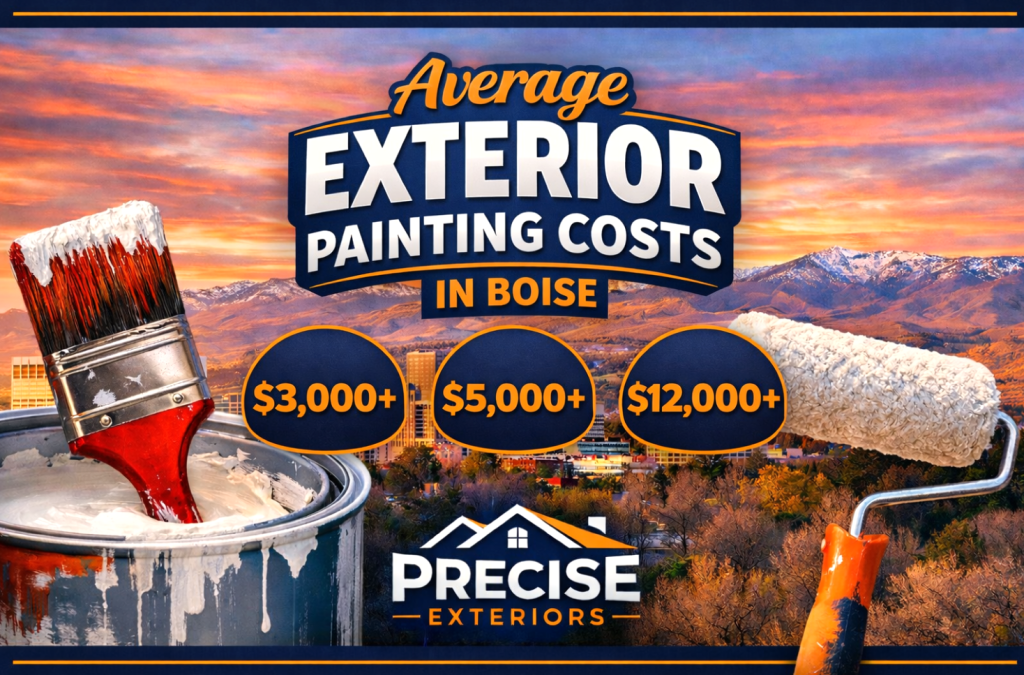
Boise exterior painting costs depend primarily on square footage, number of stories, and surface condition. Most projects range from $1.30 to $3.00 per square foot, with total costs determined by labor rates, materials, and prep requirements.
| Home Type | Typical Area (approx.) | Low Price | High Price |
|---|---|---|---|
| Small single-story (1,000–1,400 sq ft) | 1,000–1,400 sq ft | $3,000 | $6,500 |
| Average single-family (1,500–2,400 sq ft) | 1,500–2,400 sq ft | $5,000 | $10,000 |
| Two-story / larger homes (2,500+ sq ft) | 2,500+ sq ft | $8,000 | $18,000 |
Larger homes and multi-story properties cost more due to increased labor time, scaffolding needs, and equipment requirements. These ranges apply across Boise and surrounding areas including Meridian, Nampa, Eagle, and Caldwell.
What Are Typical Price Ranges by House Size and Stories?
Think of your home’s exterior like a climbing wall—the higher you go, the more it costs. Single-story homes are the budget-friendly option because painters can work from ladders, while two-story homes demand scaffolding, safety gear, and extra time. Add a third story? Now you’re looking at specialized equipment and crews trained in high-elevation work.
Why multi-story homes cost more:
- Equipment rentals: Scaffolding runs $15-$40 per day; lifts cost even more
- Safety requirements: Additional insurance, harnesses, and OSHA compliance
- Labor efficiency: Working at height simply takes longer
- Access challenges: Reaching peaks, dormers, and high gables adds complexity
Architectural features that bump up costs:
- Bay windows with multiple angles and trim details
- Decorative millwork requiring precision brushwork
- Extensive shutters and window frames
- Ornate gables, corbels, or Victorian-era detailing
Here’s the thing contractors won’t always mention upfront: older Boise neighborhoods often hide wood rot, failing caulk, or damaged siding that only becomes visible during prep. That “great deal” can quickly shift from low-range to mid-range once repairs are factored in. Always ask about potential additional costs during the inspection phase.
How Is the Cost Per Square Foot Calculated in Boise?
Per-square-foot pricing starts by measuring painted surface area—including walls, trim, and sometimes soffits—and dividing the contractor’s total estimate by that square footage to yield $/sq ft. The calculation adjusts for prep intensity: heavy scraping, rot repair, priming, and multiple coats increase the effective $/sq ft. For example, a 2,000 sq ft home at $2.50/sq ft yields a $5,000 baseline, before adding fixed fees for scaffolding, repairs, or premium coatings. Accurate measurement and asking contractors to specify what’s included in their $/sq ft number prevents surprises and enables apples-to-apples comparisons.
What Does a Detailed Cost Breakdown Include?
A transparent line-item breakdown clarifies what you pay for and why each element matters to longevity and finish quality. Typical line items include surface preparation, repairs, primer, paint (materials), labor, equipment rental (scaffolding/lifts), and cleanup; optional items include color consultation and extended warranties. Below is a concise list showing common line items and their typical share of a project.
- Surface preparation and repairs: Often 20–40% of total cost.
- Labor for painting application: Typically 30–50% of total cost.
- Materials (primer, paint): Usually 15–30% depending on product quality.
- Equipment and disposal: Fixed fees that depend on height and access.
A clear, written estimate that separates these items helps you see tradeoffs—spending more on prep and higher-quality paint reduces long-term repaint frequency and total cost of ownership.
Which Factors Most Influence Exterior Painting Costs in Boise?
Core factors—house size, siding material, paint quality, surface preparation, and accessibility—directly affect pricing because each alters labor time, materials required, or equipment needs. These variables interact, so a mid-size home with heavy prep needs can cost more than a larger home with minimal prep. The list below orders the primary drivers and explains why each matters to your final estimate.
- House size and stories: More area and height increase labor and equipment costs.
- Siding material: Wood and stucco require more prep and specialized coatings.
- Paint quality and type: Premium acrylics or low-VOC paints cost more but last longer.
- Surface preparation: Repairs, scraping, sanding, and priming significantly add time and cost.
- Accessibility and complexity: Landscaping protection, ornate trim, and tight access raise labor hours.
This ordered list helps homeowners spot which items to negotiate or prioritize when reviewing bids, and it guides decisions about where investing more yields long-term ROI.
| Factor (Entity) | Typical Impact | Value / Cost Implication |
|---|---|---|
| Siding material | Prep & material variation | Wood/stucco: higher prep and primer needs; vinyl/brick: lower prep |
| Paint quality | Durability & recoat interval | Premium acrylic: higher upfront, lower cost/year |
| Accessibility | Equipment/time | Scaffolding/lift rental adds fixed fees |
| Surface repairs | Scope creep risk | Rot repair and replacement add significant cost |
| Number of coats | Labor & material | Extra coats increase labor proportionally |
How do house size and Number of Stories Affect Pricing?
Bigger homes mean more square footage to cover, but height is where costs really jump. Two-story homes need scaffolding that can run $500 or more in rental fees alone, plus the crew moves more slowly when working 20 feet up. Taller structures also mean more time protecting gutters, windows, and landscaping. When reviewing bids, ask contractors to itemize equipment charges separately so you understand exactly what you’re paying for beyond paint and labor.
What Role Does Siding Material Play in Painting Costs?
Different siding materials change prep and product needs: wood often needs scraping and rot repair, stucco may require patching and elastomeric coatings, fiber cement needs priming but is stable, and brick sometimes needs masonry-specific primers or sealers. These material-specific steps alter labor rates and material choices, so specify your siding when requesting estimates. Material type therefore is a primary hyponym of exterior painting cost—different siding → different prep → different price.
How Do Paint Quality and Type Affect Cost and Durability?
Premium 100% acrylic latex paint costs double what builder-grade paint does, but it lasts twice as long, making the math work in your favor. Higher-end formulations resist Boise’s intense UV exposure and temperature swings better, meaning fewer touch-ups and longer intervals between full repaints. Low-VOC options add a small upfront premium but improve air quality during application. Think cost per year, not cost per gallon, and suddenly that expensive paint looks like a bargain.
How Does Project Accessibility and Complexity Influence Pricing?
Restricted access, dense landscaping, and ornamental trim require extra protection and slower, more careful work, raising labor hours and adding protective materials. Architectural detail increases masking and brushwork time compared with flat surfaces. Equipment staging on narrow or sloped lots may add logistical fees. Assessing site complexity during an in-person estimate reveals these hidden cost drivers.
How Can Boise Homeowners Budget Smartly for Exterior Painting?
Budgeting smartly starts with accurate measurement, prioritizing prep, and comparing written, line-item bids so you can balance upfront cost against long-term durability. A well-structured budget considers maintenance that extends paint life, the tradeoffs between DIY and professional work, and financing or phased approaches when needed. Below is a compact comparison of common options to help homeowners choose based on cost, skill, and benefit.
| Option | Estimated Cost | When to Choose / Benefit |
|---|---|---|
| DIY (small, low-height projects) | $200–$1,500 | Good for minor touch-ups; saves labor but risks quality issues |
| Handyman / small crew | $1,500–$5,000 | Cost-effective for moderate repairs and small homes |
| Professional exterior painting service | $5,000–$18,000 | Best for full projects; offers warranty and higher workmanship |
Use this table to compare approximate outlays and benefits; professionals reduce hidden costs and offer warranties that protect long-term investment. For accurate budgeting, ask potential contractors for free, in-person estimates, line-item pricing, and color consultations—many local providers offer these services to help you plan.
Should You Choose Professional Painting or DIY?
Professionals provide time savings, safety, warranty coverage, and consistent finish quality; DIY saves on labor but incurs equipment, time, and risk of rework. For multi-story homes or those with significant prep, professional workmanship lowers long-term cost through proper prep and application. DIY may be cost-effective for small, single-story touch-ups, but hidden costs like scaffolding rental, missed prep, and inferior finishes can negate savings. Weigh safety, time, and finish quality when deciding.
How Do You Get Accurate and Transparent Painting Quotes in Boise?
Here’s how to get quotes you can actually compare and trust, based on what Boise contractors actually provide when they’re doing business properly.
Step 1: Request On-Site Inspections, Not Phone Estimates
Never accept quotes based on square footage alone. Legitimate contractors visit your property, measure all paintable surfaces (including trim, soffits, and fascia), assess surface condition, note repair needs, and check access challenges. Phone estimates miss rot, peeling paint, and architectural complexity that drive real costs. Expect the inspection to take 30 to 45 minutes for an average home.
Step 2: Get Everything in Writing With Line-Item Breakdowns
Your quote should itemize these specific costs separately: surface preparation (power washing, scraping, sanding), repairs (rot replacement, caulking), primer (brand, number of coats), finish paint (brand, quality grade, number of coats), labor (by task or daily rate), equipment rental (scaffolding, lifts), and cleanup. If a contractor hands you a single number with no breakdown, keep shopping. Transparency separates professionals from corner-cutters.
Step 3: Verify What’s Included and What’s Extra
Ask directly: Does this cover all trim, doors, and window frames? Are shutters included? What about garage doors, railings, or deck fascia? Are you providing the paint or am I purchasing it? Who handles permits if needed? What prep work is standard versus additional cost? Contractors have different standards for what constitutes “full exterior painting,” so nail down every surface to avoid mid-project upcharges.
Step 4: Request References and Check Them
Get names and numbers for three recent projects similar to yours in size and scope. Actually call these references (most people skip this step and regret it). Ask: Did the crew show up on time? Was the quote accurate or were there surprise costs? How did they handle problems? Did they clean up properly? Would you hire them again? Five minutes per call can save you thousands in headaches.
Step 5: Compare Apples to Apples, Not Price Tags
The lowest bid usually means the skimpiest scope. Before deciding, create a comparison spreadsheet: paint brand and quality (Sherwin-Williams Duration vs. Behr Premium is not equivalent), number of coats (one vs. two makes a massive difference), prep detail level (power wash only vs. full scraping and sanding), warranty length, and estimated timeline. A $4,500 bid with premium paint and thorough prep beats a $3,800 bid with builder-grade paint and minimal prep every single time.
Step 6: Ask About Payment Terms and Avoid Red Flags
Standard payment structure in Boise: 10% to 25% deposit, 50% at project midpoint, 25% to 40% upon completion. Anyone demanding 50% or more upfront is a red flag. Cash-only payments? Walk away. No written contract? Absolutely not. Legitimate contractors carry general liability insurance and workers’ compensation coverage, provide written contracts, and accept checks or credit cards. Verify their Idaho contractor license number through the state licensing board before signing anything.
Step 7: Get Quotes From at Least Three Contractors
One quote tells you nothing. Two quotes might both be outliers. Three to five quotes give you actual market range and help identify who’s padding numbers or cutting corners. Schedule all inspections within the same week so you’re comparing current pricing, not quotes from different months when material costs may have shifted.
What Should You Look for When Choosing a Boise Painting Contractor?
Verify licensing (if applicable), proof of insurance, local references, and a written, line-item estimate that specifies paint products, number of coats, prep tasks, and warranty. Interview candidates with these core questions: Which paint brands and products will you use? What is included in surface preparation? What warranty do you provide? Ask for before-and-after photos and references from Boise-area jobs to confirm experience. Documented answers protect your budget and expectations.
Smart Budget Tips for Exterior Painting in Boise
Want to get the best value for your exterior painting project? Here are proven strategies to help you save money without compromising quality:
1. Time Your Project Strategically
Best Times to Paint in Boise:
- Late Spring (May-June): Mild temperatures, lower humidity
- Early Fall (September-October): Comfortable weather before winter
- Off-Season Discounts: Some contractors offer 10-20% discounts in slower months
Avoid:
- Summer heat (paint dries too quickly)
- Late fall/winter (temperature fluctuations affect adhesion)
- Rainy seasons (moisture interferes with paint curing)
2. Get Multiple Detailed Quotes
- Obtain at least 3-5 written estimates
- Ensure quotes include identical scope of work
- Compare line-by-line costs, not just totals
- Verify insurance and licensing
- Check references and online reviews
3. Choose Quality Paint
While premium paint costs more upfront, it saves money long-term:
- Lasts 2-3 times longer than budget paint
- Requires fewer coats (less labor)
- Better coverage means less paint needed
- Superior weather resistance reduces maintenance
4. Handle Simple Prep Work Yourself
If you’re handy, you can reduce costs by:
- Power washing the exterior (rent equipment for $50-$100/day)
- Moving outdoor furniture and decorations
- Removing shutters (if comfortable with ladders)
- Trimming vegetation near the house
Caution: Leave major prep work, repairs, and all painting to professionals for safety and quality.
5. Limit Color Changes
Sticking with similar colors or minor shade changes:
- Reduces primer needs
- Requires fewer coats
- Decreases labor time
- Saves 15-25% on total costs
6. Combine Projects
Painting multiple structures at once can reduce per-project costs:
- House exterior + garage
- House + fence
- House + deck staining
Contractors often provide package discounts when booking larger projects.
7. Consider Paint-Only Services
Some contractors offer paint-only quotes where you:
- Purchase your own paint (shop sales)
- Provide materials
- Pay reduced contractor fees
This works best if you’re knowledgeable about paint selection and quantities.
8. Maintain Your Paint Job
Extend your paint’s lifespan with regular maintenance:
- Annual power washing: Removes dirt and mildew ($150-$300)
- Touch-ups: Fix chips and peeling immediately
- Caulk inspection: Reseal gaps every 2-3 years
- Gutter maintenance: Prevents water damage to siding
Proper maintenance can extend paint life from 7 to 10+ years.
9. Address Issues Early
Small problems become expensive when ignored:
- Wood rot: Costs $100-$500 to repair vs. $1,000+ for extensive damage
- Moisture problems: Fix before painting to prevent premature failure
- Structural issues: Resolve before investing in new paint
10. Verify What’s Included
Before signing a contract, confirm:
- Number of coats
- Paint brand and quality level
- Prep work details
- Warranty or guarantee terms
- Payment schedule
- Cleanup responsibilities
Exterior Painting Cost Verdict –
Exterior paint endures roughly 1,000 hours of UV exposure annually in Boise. Most homeowners spend $3,000 to $7,000 on professional work that lasts seven to ten years. Stop sitting on the fence if your house needs painting, because the longer you wait, the chances of water or sun damage increase!
Need exterior painting that actually lasts? Contact us here at Precise Exteriors, where we take painting and exterior remodeling seriously! We’re Boise’s gold standard for quality work, transparent pricing, and results that protect your investment for the long haul.