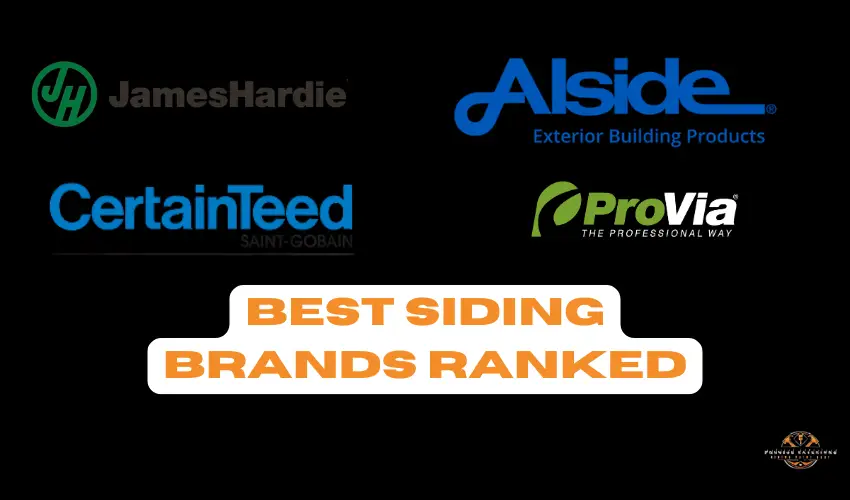
What are the best siding brands? What about the best for the Treasure Valley?
Short answer up top, because that’s what a ranking is for: among the best siding brands sold here, James Hardie’s HZ5 fiber cement is the one I’d put on most Treasure Valley homes, and I’ll rank the rest below by the job each one does best. The longer answer is that “best” bends to your walls. A house baking in west sun on the Boise Bench needs something different than a shaded Nampa lot or a foothill home dodging embers. So rather than crown one winner and stop, I’ve given each brand the category it actually earns, named who it’s for, told you when to skip it, and flagged the one I steer people away from entirely.
One rule governs the whole list. Judge siding here by how it survives our high-desert sun and our wild temperature swings, not by a national score. Boise sits near 2,730 feet, so homes take roughly 10 to 15% more UV than they would at sea level across 200-plus sunny days, and that light bleaches pigment and eats the binders holding it. On top of that, the valley routinely swings 50 to 60 degrees in a single spring day, cycling every material through expansion and contraction thousands of times a year, plus 120 to 130 freeze-thaw cycles that crack anything absorbing moisture.
Whether you need the best siding for Boise or just the type to plan ahead, every pick below is ranked against that reality.
The 5 Best Siding Brands Ranked by Style & Category
1. James Hardie HZ5 fiber cement: Best Overall for Our Sun
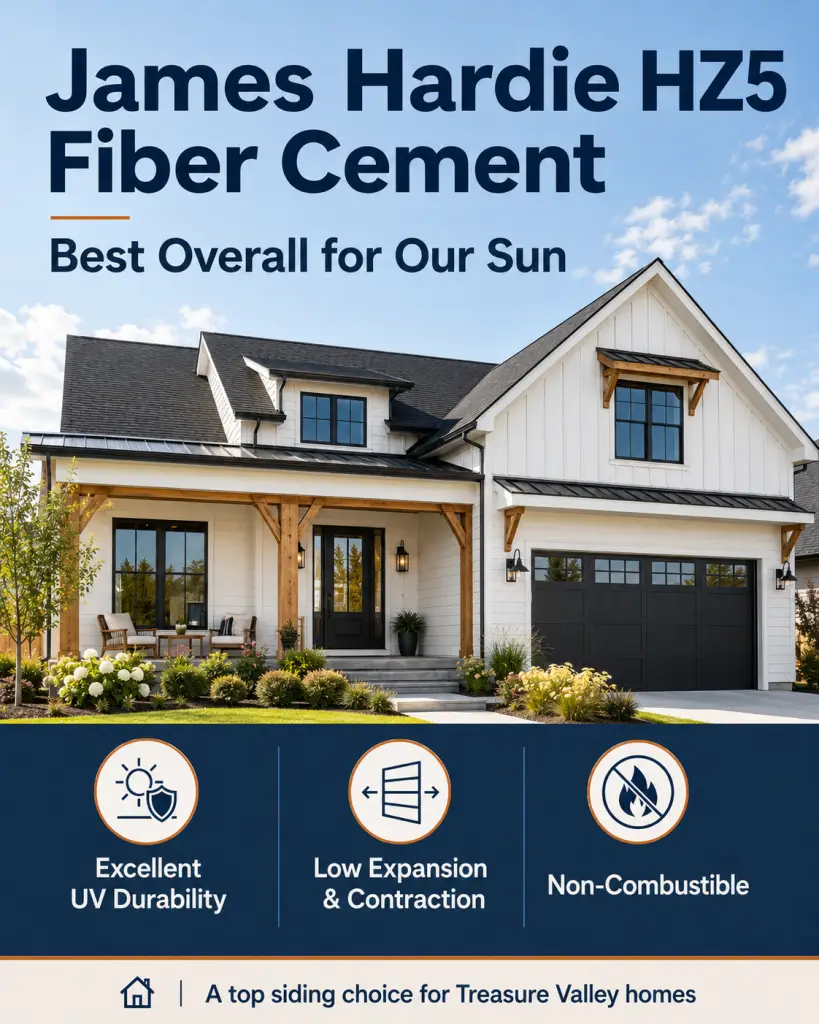
Nothing else handles the Treasure Valley’s combination of UV and freeze-thaw as calmly. Fiber cement is essentially a thin cement plank, so it barely moves through our 50-degree daily swings, feeds no rot, and won’t burn. Hardie also builds it by climate zone, and HZ5 is the northern formulation made for freeze-thaw and dry heat rather than the humid South. The factory finish is the closer: ColorPlus is a baked-on, multi-coat system with a 15-year finish warranty that holds color against our light far better than field paint, and the product warranty runs 30 years non-prorated, meaning full coverage the whole term instead of a number that shrinks yearly.
Best for: homes with hard south and west exposure, and anything near the foothills where non-combustibility is a safety call. Skip it if: hail is your top worry (rigid cement can chip on a direct strike) or the budget can’t absorb the heavier, slower install.
2. LP SmartSide engineered wood: Best for Hail and Busy Rooflines
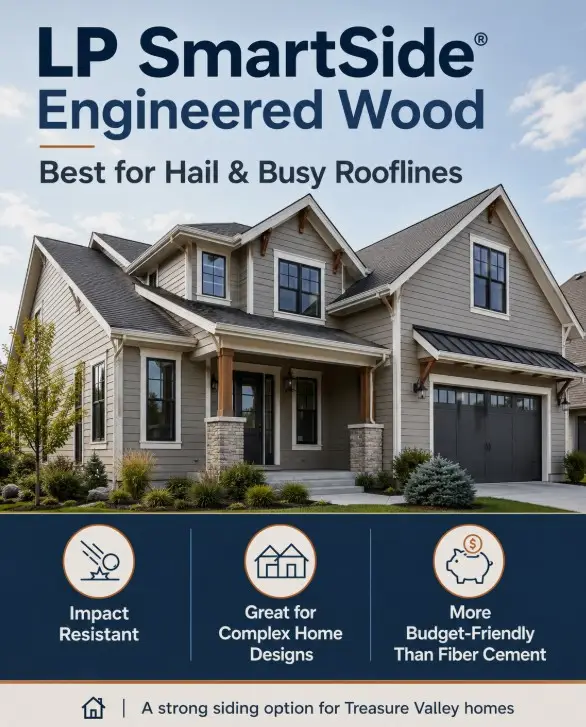
When spring hail is the threat, engineered wood flips the math. It flexes and absorbs a strike where fiber cement can crack, and its lighter weight makes it faster to hang on homes full of gables, dormers, and bump-outs. Installed, it typically runs 15 to 25% under Hardie. Read the warranty with clear eyes, though: the 50-year coverage is prorated, dropping about 2.2% a year after year five, so it’s worth only around a third of face value by year 30. The strands are treated with zinc borate against rot and pests, which handles our climate fine, on one condition below.
Best for: hail-exposed homes with lower fire risk, complex elevations, and budgets that need Hardie looks for less. Skip it if: you won’t commit to keeping it painted, because raw or unpainted engineered wood fails early no matter the brand.
3. CertainTeed Vinyl Siding: Best Vinyl for Color That Holds
If you’re going vinyl, fade is the enemy in our sun, and CertainTeed fights it better than the rest. Its ColorMax pigment runs through the full panel thickness instead of coating the surface, so color holds longer and a scratch doesn’t expose a pale streak underneath. The premium lines run a heavier 0.044 inch or thicker, which matters more than buyers expect: industry testing shows panels at 0.044 inch and up deliver roughly 40% better impact resistance than thin builder stock, and thicker vinyl also keeps its shape through our temperature swings instead of oil-canning.
Best for: homeowners who want vinyl that still looks sharp after a decade of Idaho sun. Skip it if: you’re chasing a very dark, dramatic color, where the next pick does it better.
4. Mastic by Ply Gem vinyl: Best Vinyl for Dark, Modern Colors
Deep charcoals and navies are everywhere right now, and on cheap vinyl a dark panel cooks: it absorbs heat, warps, and fades fast under our light. Mastic’s SolarDefense reflective pigments are engineered to bounce heat off dark panels, curbing exactly that warping and fading, which makes it the vinyl I trust for bold colors here. Ply Gem also backs it with a 50-year hail damage warranty, a genuine plus in the valley. It sits at mid-range pricing with color tech that punches above the tier.
Best for: anyone set on a dark, saturated color that needs to stay that color. Skip it if: color range is your priority, since the premium palettes run deeper elsewhere.
5. Alside vinyl: Best Value with an Insulation Upgrade
For a tighter budget, or an older home with poor wall insulation, Alside earns its spot by solving two problems at once. Its Prodigy line carries one of the industry’s thickest foam-backed insulation packages, which fights thermal bridging (heat escaping through the studs) and can noticeably cut energy loss on a drafty house, while ChromaTrue color helps the panels hold their tone against UV. It’s a smart use of money when comfort and cost both matter.
Best for: value-focused projects and drafty homes wanting an insulation boost baked into the re-side. Skip it if: you’re tempted by the thinnest bottom-tier profile, which brings us to the skip list.
Skip This · The Brand and Grades I Steer People Away From
A ranking that only names winners is half a ranking. Bottom-tier vinyl in the 0.035 to 0.040 inch range is the false economy I talk homeowners out of most: it shaves a little off the bid, then buckles and fades within a few years on the sun-hammered walls. I’ve also fought persistent quality-control problems with certain Royal Building Products vinyl lines, enough color and reveal inconsistency between production runs that matching panels becomes a headache. And any engineered wood delivered raw and never painted belongs here too, whatever name is stamped on it. The through-line: cheap thickness and skipped finish cost more within five years than they ever save up front.
Quick-glance ranking
| Rank | Brand | Material | Wins at | Watch out for |
|---|---|---|---|---|
| 1 | James Hardie HZ5 | Fiber cement | UV, stability, fire safety | Chips on hail; costs more |
| 2 | LP SmartSide | Engineered wood | Hail, complex walls, value | Prorated warranty; must stay painted |
| 3 | CertainTeed | Vinyl | Color retention | Not the best for dark shades |
| 4 | Mastic (Ply Gem) | Vinyl | Dark colors, hail warranty | Smaller premium palette |
| 5 | Alside | Vinyl | Budget plus insulation | Spec mid-tier or better, not the thinnest |
Why is the brand only 40% of the outcome?
Here’s the part that outranks everything above. You can buy the top brand in the right category with the best factory finish and still watch it fail in six years if the crew hangs it wrong. That’s the pattern behind nearly every callback I’ve seen, and these failures hide for three to seven years before they surface, by which point the repair costs far more than doing it right would have.
A few things separate a 40-year wall from a 20-year one, and none show from the curb. Fastening has to leave the material room to move, and with vinyl especially, nailing tight instead of letting the panel float is the number one cause of first-year buckling. A rainscreen or ventilation gap behind the siding lets the wall dry and breathe. Flashing and clearances at every window, penetration, and transition have to be right, with enough gap above grade that snowmelt can’t wick in. And where the budget allows, factory finish beats field paint every time in our UV.
As the crew at Precise Exteriors puts it: “The product decision is the easy part. Almost every callback I’ve seen came down to how it was hung, not what was hung. Pay for the install, not just the label.“
Turning this Siding ranking post into your pick
Match the list to your house and the choice gets simple. Hard sun on your street-facing walls or a lot near the foothills points to Hardie HZ5. Hail country with a busy roofline leans LP SmartSide. Going vinyl, start with CertainTeed for lasting color or Mastic for a bold dark shade, and let Alside carry a budget job that also needs insulation. Whatever you land on, get the exact product line and panel thickness in writing, and treat the installer’s track record as seriously as the brand.
The one move worth making before you shop: have someone stand at your home and read its real exposure, how much west and south sun those walls take, whether you back to open range, how your current siding has aged and where. That five-minute read matches the ranking to your house better than any roundup of the best siding brands written for a climate that isn’t ours.
Homeowners in Boise, Eagle, Meridian, Nampa, Kuna, and across the Treasure Valley can reach Precise Exteriors at 208-901-4839 for that walkthrough and a straight, itemized comparison.
Frequently Asked Questions About the Best Siding Brands
1. What are the best siding brands for homeowners?
Some of the best siding brands available today include James Hardie, LP SmartSide, CertainTeed, Mastic by Ply Gem, and Alside. James Hardie is known for durable fiber cement siding, while LP SmartSide offers impact-resistant engineered wood. CertainTeed, Mastic, and Alside provide several dependable vinyl siding options at different price points.
2. What is the best siding brand for Treasure Valley homes?
James Hardie HZ5 fiber cement is our top overall choice for many Treasure Valley homes. It performs well through Idaho’s strong sunlight, freezing winters, dry summers, and frequent temperature changes. Its resistance to moisture, rot, pests, and fire also makes it a strong option for homes in Boise, Meridian, Eagle, Nampa, Kuna, Caldwell, and surrounding communities.
3. Is James Hardie or LP SmartSide better for Idaho homes?
James Hardie is generally better for homes with heavy sun exposure, elevated fire risk, or concerns about long-term dimensional stability. LP SmartSide may be the better choice for hail-prone areas, complicated home designs, or homeowners looking for a wood-style appearance at a lower installed cost. The right choice depends on your home’s exposure, budget, maintenance plans, and exterior design.
4. What is the best vinyl siding for the Treasure Valley?
CertainTeed is a strong choice for homeowners who prioritize long-term color retention, while Mastic by Ply Gem is well suited for dark, modern siding colors. Alside can be a practical option for budget-conscious homeowners who also want insulated siding. Regardless of the brand, we recommend choosing a thicker, higher-quality vinyl panel instead of thin builder-grade siding.
5. Does siding installation matter more than the brand?
The installation quality is just as important as the siding brand. Even premium siding can buckle, leak, crack, or fail early when it is fastened too tightly or installed without proper flashing, clearances, drainage, and ventilation. Homeowners should compare the installer’s experience, workmanship standards, warranty, and local reputation—not only the product name on the estimate.